 Join The Club



Britain joined the unofficial boycott on Thursday by saying government ministers would not attend the first batch of matches in the former Soviet republic, which is co-hosting the tournament with Poland, because of human rights concerns.
Germany and France are among other countries to have announced similar moves and European Commission President Jose Manuel Barroso said he had no plans to attend. A May summit was scrapped in Ukraine when nine European leaders refused to come.
President Viktor Yanukovich still hopes the tournament, starting on Friday, will show the world how far Ukraine has come since it broke free of the Soviet Union in 1991 but the risk of it backfiring after a deluge of bad publicity is increasing.

"Europe 2012 has provided a unique opportunity to present our country to the world and to achieve European standards, not only in organising the tournament but in the life of our citizens," said Deputy Prime Minister Borys Kolesnikov.
"If Ukraine does not cope well with the organisation of the tournament and show it's a hospitable host, it will reflect on its reputation," said Kolesnikov, who was in charge of preparations for the finals.
The month-long tournament was starting in Poland on Friday and the final will be held in the Ukrainian capital, Kiev, on July 1.
Despite opposition by its former Soviet masters in Moscow, the country of 46 million people, sandwiched between Russia and Western Europe, hopes eventually to join the 27-member European Union.
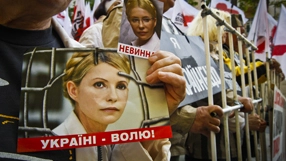
But European leaders have been increasingly upset by the treatment of Yanukovich's rival Tymoshenko, a former premier sentenced to seven years in prison last October for abuse of office after a trial the West says was politically motivated.
She alleged from jail in the city of Kharkiv in late April that she had been physically manhandled by prison guards and is now being treated for chronic back problems in the same city, a Euro 2012 venue. The prison authorities deny she was assaulted.
"SELECTIVE JUSTICE"
"No ministers will be attending group games at Euro 2012," a British Foreign Office spokesman said in London, which will soon host the Olympic Games.
"We are keeping attendance at later stages of the tournament under review in the light of ministers' busy schedules ahead of the Olympics and widespread concerns about selective justice and the rule of law in Ukraine."
Prince William and Prince Harry had never planned to go, a spokesman said, although both are sport lovers. The Daily Mirror newspaper expressed concern the boycott would whip up anti-British sentiment and put British fans in danger.
German Chancellor Angela Merkel described Ukraine last month as a dictatorship where people were suffering under repression.
Barroso's spokeswoman said in April that he had no intention of going to Ukraine "the way things stand now" and EU Justice Commissioner Viviane Reding was also staying away.
Political analyst Volodymyr Fesenko of the
