 Join The Club


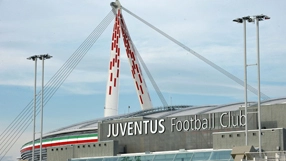
The Juventus Arena, which hosted its first Serie A match on Sunday when Parma visited, has a capacity of just 41,000, a figure which pales in comparison to the grounds of rivals Milan/Inter (80,000), Barcelona (99,000), Manchester United (76,000) and Bayern Munich (70,000).
But Aldo Mazzia, the man recently entrusted with boosting the once mighty club's fortunes following the after-effects of a 2006 match-fixing scandal, reckons size is not everything as Juve become the only Italian club to own their own ground.
"We believe that it's better to have a stadium that's a bit smaller but almost always full and closer to the team than to have a much bigger one that only gets sold out for a few games," he told Reuters in an interview.

Juventus, who have traditionally gained country-wide support from migrants working in Turin for their sister company Fiat, hated their old Stadio Delle Alpi home (69,000 capacity) because of a lack of atmosphere caused by a running track and empty seats.
Since 2006 Italy's best supported and most successful domestic club have shared the Stadio Olimpico with Torino and their new ground, which has yet to be given an official name despite a long search for a sponsor, has been built on the site of the Delle Alpi.
"The Stadio Olimpico has a 25,000 capacity and a very limited number of premium seats," said Mazzia, who replaced Jean-Claude Blanc as CEO in May after succeeding Michele Bergero as chief financial officer a month earlier.
"Stadium revenues for last season were 11.5 million euros of which 9.8 million euros came through ticketing and 1.7 million euros for other services, an amount that was around 7.5 percent of total revenue.
"The new stadium offers a completely different scenario. Among the 41,000 there are around 4,000 premium seats. There will be great views because there is no track and fans are close to the pitch (7.5 metres) creating a special atmosphere.
"Stadium facilities will be open seven days a week and there will also be plenty on offer for fans, families and companies looking for commercial activity. The idea is to increase income and diversify revenue streams."
Along with shops, restaurants, bars, parking, conference and banqueting facilities, a Juventus museum will open in early 2012.
"We predict stadium revenues to increase to 15 percent of commercial income, which is double the current amount, with revenue rising to 32 million euros of which 20 million will come from ticketing and six million from naming rights," said Mazzia, adding there was scope to increase the number of premium seats in future seasons.
The Turin side have won a record 27 scudettos as well as two European Cups but have struggled since the Calciopoli scandal in 2006 when they were demoted to Serie B and stripped of the 2004/05 and 2005/06 titles for influencing the selection of referees.
Last year they dropped below AC Milan (7th) and Inter Milan (9th) to 10th in Deloitte and Touche's Football Money League, suffering even more than other Italian clubs from poor attendances.
MODERN ARENA
Matchday revenue accounted for just eight percent of total income, well below the 22 percent average Deloitte calculates for Europe's big five leagues (England, Germany, Spain, France and Italy).
But Mazzia believes the club's modern arena will now help push Juventus ahead of the Serie A pack in generating money and make them better able to compete in Europe.
"Today Juventus is the only Italian club to own its stadium," said the 55-year old.
"While it's probable that others will follow our lead, I haven't see any new plans, so from that point of view Juventus has a co
