
 Join The Club



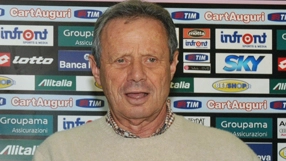
Best known for hiring and firing managers at will, Zamparini said a mixture of long-standing Italian bureaucracy and the effects of the global economic crisis had weakened the ability of Italy's top clubs to compete with the continent's best.
"Italy has always been 20 years behind the rest," Zamparini told Reuters. "Spanish and English clubs have stadiums, spend more than us and are able to maintain larger debts. We don't spend, so players leave.
"Once, big Italian clubs used to buy; now we sell, look at [Samuel] Eto'o, and it shows in our results in Europe. Also, our league is among the ugliest to watch because it's very tactical. The Spanish, English and even the French offer better entertainment."

Italy's fall from grace means only the top two clubs in Serie A this season will automatically qualify for the Champions League with the third-placed side in the final qualifying round.
The fourth spot was taken away from Italy and given to Germany's Bundesliga.
"We are losing income against the other big leagues," says the Rosanero chief. "Juventus have their stadium, which is very nice, but stadiums are a great defect for us.
"In Italy you need 10 years to get permission to construct anything. You need eight years to get the OK. We hope to do it in two. If they allow us, we will do it."
Palermo, who are one of two Italian clubs already knocked out of the Europa League before the group stage, have made an impressive start to the Serie A campaign under new coach Devis Mangia, and go into Saturday's match at the San Siro against champions AC Milan lying fourth in the table.
Zamparini, who confirmed his no-nonsense reputation by axing Stefano Pioli before the former Chievo Verona boss had even sat down for a league game this season, may have claimed more than 30 coaching victims in his time as president of Venezia and Palermo, but his on-field success and ability to execute club finances speaks for itself.
Since taking over from Franco Sensi as chief in 2002 with the Rosanero languishing in Serie B, Zamparini oversaw promotion and UEFA Cup/Europa League qualification in six of the past eight seasons, while balancing the budget thanks to a canny ability in the transfer market.
Luca Toni to Fiorentina, Edinson Cavani to Napoli and, most recently, Javier Pastore to Paris Saint-Germain are some of the players that Palermo have profited from.
"There's no special philosophy," said the 70-year old, who presided over the Sicilian side's best-ever finish in 2010 when they ended fifth. "We've focused on bringing in young players from Italy and abroad. It's the only way to compete against the big clubs because we don't have their revenues.
"We fish in international markets for our young stars, in South America and Africa - it's the same philosophy that Udinese have. We buy players who may go on to bigger clubs like Pastore, though his type comes around once every 20 years."
"That's why Palermo doesn't have any debt. I made an initial investment, and now the club has to balance its books on its own merit. We may be up one year and down the next but our aim is to break even."
Despite enjoying just a quarte
