 Join The Club



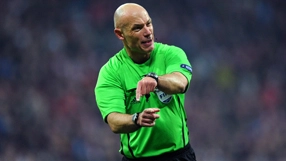
Webb said in an interview that the Muamba incident during an FA Cup match against Tottenham Hotspur and his subsequent recovery had had a lasting impact on him.
Speaking at FIFA's medical congress, he said that referees might be reluctant to stop the flow of games if they thought a player was "crying wolf" and that any delay could have been fatal for Muamba.
"I turned and saw him lying face down on the ground with no one else nearby - this was clearly a major concern and something more than a normal injury," said Webb who refereed the 2010 World Cup final.

"The fact he wasn't rolling around screaming in agony, the way he went down with no contact, meant immediately it was serious. And it was not only me - the players recognised it. You see William Gallas's reaction - an opposing player - immediately waving to the bench to come on.
"If the game had not been stopped within 20 or 30 seconds, that might have made a difference to his chances of recovery.
"One of our obligations as a referee is to try and observe fair play and keep the game flowing when we can. But if players cry wolf too many times then there is a possibility that maybe we will not react in the way we need to do based on what we saw there.
"If we come under criticism for stopping the games too many times for doctors or physios to enter the field of play then referees might be inclined not to stop the game."
Webb said he had the feeling the crowd was pushing with Bolton doctor Jonathan Tobin to get Muamba's heart going.
"They realised how serious it was once the CPR started," he said. "It was amazing, absolutely astonishing.
"It was just the most unbelievable crowd reaction I have ever experienced in football and thinking about it now makes me feel emotional. There were 40,000 people there and the doctors were so focused, doing what they did in those circumstances."
SLIM HOPE
Webb said that as he drove home after the game he feared Muamba had little chance of surviving.
"There was a numb sensation that lasted the whole night and next day about what you'd witnessed," he said.
"We thought it was a slim hope that he would pull through but no news was good news and gradually there was some more hope."
The match was abandoned after the incident which happened shortly before half-time.
"The players pretty much decided themselves," Webb said. "There were players in the shower and they had already taken the decision to call the game off. Players from both teams were clearly of the mind that they didn't want to continue in those circumstances."
Tobin told reporters it was still too early to say whether the 24-year-old Muamba would ever play again.
"That decision is yet to be taken. Discussions are going on with the cardiologists in London and Fabrice and they will eventually decide what will happen," he said.
While Muamba, whose hear
