
 Join The Club



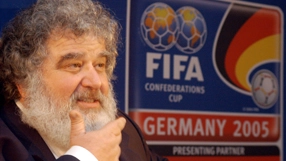
The portly 65-year-old American with the Santa Claus beard, a member of the powerful exco for the last 15 years, joined FIFA's critics after his colleagues refused to give his CONCACAF confederation an extra place at the 2014 World Cup in Brazil.
Nevertheless, he told Reuters in an interview that while no major organisation can please everyone all the time, FIFA's "representative democracy" cannot be bettered.
Blazer was not slow to complain when he thought the exco got last week's decision wrong and quickly informed followers on his Twitter account of his chagrin at the outcome.

He was upset that the North and Central American and Caribbean countries will only have three finalists - and possibly a fourth through the play-offs.
While CONCACAF are stuck with the same 3.5 places they had for last year's World Cup in South Africa, there will possibly be six South American countries at Brazil 2014, out of the 10 vying for places in the qualifiers, and five from Africa.
Last week Blazer described the exco decision not to change the allocation of slots "completely ludicrous," adding a criticism people often level at FIFA: "Everyone was protecting their own interests rather than doing what was right".
But he defended the world governing body to Reuters when he said: "In any group where you have different points of view, you will always have dissatisfaction with decisions that are taken.
"FIFA has to deal with the passions and interests of people... when it comes to football, your feeling is always based on passion. That's a great thing, but it also happens to make us the target of criticism when it comes down to it.
"Even my own criticism last week regarding CONCACAF's number of teams in the 2014 World Cup came from passion. But we are a representative democracy.
"There are 24 people from all around the world on the FIFA exco and we represent a lot of different points of view. But, as far as I am concerned, you cannot get better than a representative democracy."
IFAB STRUCTURE
Blazer was talking after the annual meeting of the International Football Association Board (IFAB), the body responsible for formulating the laws of the game.
Formed in 1886, for many years it was a little known offshoot comprising the British associations and FIFA that quietly tinkered around with the laws.
It now attracts lots of media attention especially when debating issues like goal-line technology or five-man refereeing systems. Blazer, naturally, has an interesting view of IFAB.
"It is not an anachronism, but the problem with IFAB from my perspective is that there are times when all eight members are from Europe - we had that a couple of years ago.
"There are four statutory members from the British associations. We had the president and the general secretary of FIFA, the president of UEFA and the president of the referees' committee and that gave us all eight from Europe.
"That was not very good for the rest
