
 Join The Club



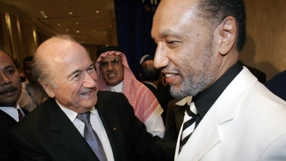
Neither of those tasks will be simple for the 61-year-old Qatari president of the Asian Football Confederation (AFC), who has been hinting for months that he will stand against the 75-year-old Swiss.
If he does decide to take his former ally on, does he have any chance of unseating him? Some senior figures in the game are unconvinced.
Reuters sources, who have spoken on condition of anonymity, believe Bin Hammam should wait until 2015 when Blatter, who will then be 79, would be unlikely to stand again, giving Bin Hammam a better chance of winning a straight contest with, perhaps, UEFA president Michel Platini.

One member of FIFA's executive committee told Reuters: "To win an election like this, you need to be able to present a real vision of the future, have a real plan.
"I don't think Mr Bin Hammam has a plan. He has ideas and talks of reform, but many people in world football like the way things are.
"They do not necessarily want change at the top and, as they have the vote, they are the people who matter."
A second source told Reuters: "If you look at his own constituency, the Asian Confederation is split. If he does not have the backing of his own Confederation, he cannot become the president of FIFA."
A glance back in time would tend to back up that analysis. In 1998 Blatter trounced UEFA president Lennart Johansson 111-80 at the FIFA Congress in Paris and succeeded Joao Havelange who had retired after 24 years in the job.
In 2002 in Seoul Blatter, in the middle of fighting off allegations of mismanagement, scored a landslide 139-56 vote victory over African Confederation president Issa Hayatou of Cameroon.
Analysis of the votes afterwards indicated that not all of Europe backed Johansson and Africa was split in its support of Hayatou.
Which is exactly where Bin Hammam, a strong Blatter supporter in those two elections, finds himself today after 15 years on the FIFA executive.
BLATTER MEN
In early January this year, Prince Ali bin Al Hussein of Jordan scored a shock victory at the AFC Congress in Doha over Chung Mong-joon for the post of Asian vice-president on the FIFA executive committee.
Prince Ali had the private support of Blatter who played a political masterstroke by helping to unseat Chung, a potential future FIFA president and opponent, for a young man who would be no threat to his own position.
Tellingly, after the Congress Sheikh Ahmad Al-Fahad Al-Sabah of Kuwait, told reporters in a thinly veiled message to Bin Hammam: "The 25 who voted for Prince Ali today, will all vote for Mr Blatter in any presidential election. There is no doubt about that."
Since then, Bin Hammam has been canvassing support and says he will make up his mind and announce his intentions before the UEFA Congress in Paris on March 20.
But if he does stand, and was to beat Blatter on June 1, what sort of man would be at the pinnacle of the world game for the foreseeable future.
