
 Join The Club



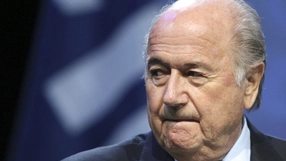
The creation of the less-than-imaginatively named committee was one of three measures announced by Blatter following his re-election on Wednesday but none offered much hope of real change in football's beleaguered world governing body.
Blatter's fourth and final mandate could also see the 75-year-old face internal divisions as he battles to push reform through a federation where many members still believe nothing needs fixing.
He will also have to deal with the powerful, wealthy European clubs who are becoming increasingly agitated at FIFA's perceived heavy-handedness.

Blatter, re-elected unopposed after his opponent Mohamed Bin Hammam withdrew from the race amid cash-for-votes allegations, likes to see FIFA as a force for good which uses the sport to promote social and education programmes across the world.
But instead of being lauded for its social conscience, Blatter had to listen to a stinging reproach from the president of his own country who urged FIFA to "take seriously the many criticisms voiced about corruption and a lack of transparency.
"It is of the utmost importance because your organisation should be an example not only to young people but to the world," Micheline Calmy-Rey said in her address to the opening of the FIFA Congress.
"Let not money spoil your ideals."
THREE MEASURES
Blatter, himself cleared on Sunday after allegations that he had behaved unethically in the presidential race, appeared stung into action by that as he pushed through three measures immediately after his re-election.
The first was to change the way World Cup hosts are chosen, increasing the electoral college from the 24-man executive committee to the 208-member Congress, reversing a change made in the mid-1970s.
However, with the 2022 World Cup hosts already decided, this change will not have any effect for at least seven to eight years while the executive committee still has a role in drawing up a short-list of suitable candidates.
Blatter then went on to announce changes to the ethics committee, separating the investigation process from the final decision-making, and the creation of the Solutions Committee as a general watchdog.
Neither of these moves are likely to placate the many observers who believe an external investigation into FIFA's affairs is needed.
International corruption watchdog Transparency International, saying FIFA's Ethics Committee was "shrouded in secrecy", had suggested more far-reaching measures.
It proposed clear rules on how to deal with allegations of corruption, the appointment of an ombudsman, a review of the existing code of ethics, compliance clauses for all contracts and a review of the process by which television rights and sponsorship contracts are awarded.
Blatter's only concession was that outsiders may be brought in "if necessary" with former U.S. Secretary of State Henry Kissinger, 88, and former Dutch international player Johan Cruyff named as two possible advisors.
