
 Join The Club


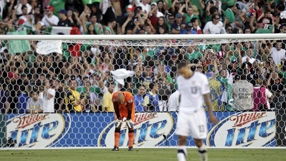
Bob Bradley's team were beaten 4-2 by Mexico in the final at the Pasadena Rose Bowl on Saturday as their southern neighbours fought back from two goals down in spectacular style.
The past three weeks have shown much that is positive about the rise of soccer in the States, in particular the sell-out crowds and impressive television ratings, mainly on the Spanish language Univision.
The Gold Cup has become as much a festival of Latin football in the United States as it is the continental championship and it has been an entertaining event.

The driving force behind most of the numbers has been the Mexican-American community and they ended the tournament with the biggest smiles after victory in the final.
While the marketing men in the States are happy to embrace the Mexican national team as a business opportunity, for fans of the U.S. national team the tournament has revealed some uncomfortable truths.
The defeat by Panama in the group stage was an embarrassing result for a team who just two years ago were beating Spain and scaring Brazil in the Confederations Cup.
A 1-0 win against Guadeloupe was the bare minimum and while a quarter-final win over Jamaica and a revenge victory over Panama in the last four were better displays, the Mexico defeat was a blunt reminder that they are second best in North America.
It is another sign of the game's growth that Bradley now faces the same kind of criticism from fans and pundits that coaches in the game's traditional strongholds endure.
"Bradley showed in the final that he has a good feel for this team and the courage to make bold moves, but this is still a team that spent the majority of the Gold Cup looking stale and lifeless far too often," blogger Nathanial Uy wrote on bleacherreport.com.
"There is no greater condemnation of a coach than that."
EASY TARGET
The 53-year-old Bradley, however, did show a fresh willingness to experiment, both with personnel and tactics.
He pulled off several surprises such as leaving record goalscorer Landon Donovan on the bench for the quarter and semi-final and starting Freddy Adu in the final.
Bradley threw aside caution in the final with an ultra-attacking formation which looked to have delivered a stunning victory before being swept aside by Mexico's young talent.
Talent, or the lack of it, is fundamentally the problem facing the United States.
For all the investment in youth and college soccer, the country has yet to produce a player with the technical gifts of Mexico's Giovani dos Santos, the directness and pace of Pablo Barrera or the deadly finishing ability of Javier Hernandez.
Bradley has had solid defenders at his disposal but when right-back Steve Cherundolo went out injured early in the first half on Saturday, the team had to turn to Jonathan Bornstein who has barely featured in recent weeks for club or country and struggled from the outset.
By contrast, Mexico lost the vastly experienced pair of Rafa Marquez and C
