
 Join The Club



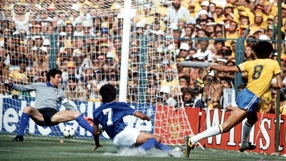
Socrates Brasileiro de Souza Viera de Oliveira, a lifelong smoker and drinker, had been on a life support system in a Sao Paulo hospital since Thursday when he was admitted suffering from food poisoning.
The captain of one of the greatest international sides to never win the World Cup, Socrates was a medical doctor, an intellectual, a cultural icon and a political activist who used his celebrity to fight for the end of Brazil's 1964-1984 military government.
"Socrates was a buddy, a great friend, one of those figures football's going to miss for everything he represented," his former Brazil team-mate Junior told Reuters by phone from his Rio de Janeiro home.

"Whoever shared life with him enjoyed the special person he was, intelligent, cultured, fun, a ball ace. He's the kind of figure hard to find in football," added the left-back from the 1982 and 1986 Brazil teams.
Socrates had been taken to hospital three times since August, when he spent nine days there due to a digestive hemorrhage caused by excessive drinking.
The former attacking midfielder, who played for Brazil at the 1982 and 1986 World Cups, spent 17 days in the hospital in September with liver trouble and had been recommended for a transplant.
BIG SKINNY ONE
Born on February 19, 1954, in Belem, the largest city of Brazil's Amazon region, Socrates started out at Botafogo-Ribeirao Preto where he became their top player while studying at the local university.
He joined Sao Paulo club Corinthians in 1978 and stayed for six years.
Bearded, thin and popularly known as 'Magrao' or the 'Big Skinny One', Socrates was part of a golden Brazilian generation who included midfielder Zico, Junior, Falcao and Eder.
His brother Rai, who survives him, went on to play for F.C. Sao Paulo. Rai was on Brazil's national team who won the World Cup in the United States in 1994
Corinthians, who won the Brazilian championship for the fifth time on Sunday, said: "Today, which should be only a day of joy as the 'Brasileirao' is settled, started sadly for Brazilian football, mainly for Corinthian [fans].
"[We] say goodbye to 'Magrao' with sadness but we also remain grateful for the honour of having seen one of the greatest players in football wearing the white and black shirt in so many games.
"Thank you for the beautiful goals, touches of genius, majestic football only Socrates played," the club said in a statement on their website accompanied by a picture of Socrates during his playing days.
The Brazilian Football Confederation had announced a minute's silence would be observed before kick-off at all matches on Sunday, the final day of the championship. Corinthians' players raised a single raised fist in salute to Socrates's goals.
An astute passer and reader of the game, Socrates earned his nickname with a uniquely nonchalant playing style, using the back-heel to telling effect and scoring memorable goals with both feet.
His languid penalty-taking style, eschewing
