
 Join The Club



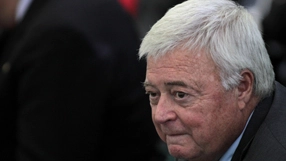
Teixeira, the most powerful man in Brazilian football for more than two decades, suffered from health problems and had been under intense pressure to stand down.
Relations between Brazil and world football body FIFA have soured in recent weeks as the two bicker over the slow pace of preparations for the World Cup.
The 64-year-old football boss tendered his resignation in a letter that was read out to reporters at the Rio de Janeiro headquarters of the Brazilian Football Confederation, or CBF.

"I leave the presidency of the CBF definitively with the feeling of having done my duty," Teixeira said in the letter.
He said he was standing down for health reasons, just days after he requested a temporary medical leave of absence to treat diverticulitis, a painful bowel condition.
Teixeira will be succeeded in both posts by Jose Maria Marin, a 79-year-old former politician who is little known outside the closed world of the CBF. Marin could run the CBF until early 2015, when Teixeira's term was set to end.
Marin made headlines in January while presenting the winners of a junior football tournament with their medals. Cameras caught him slipping one of the medals into his pocket, prompting accusations of theft.
Marin told reporters on Monday that the medal was a gift from tournament organisers and called the accusations a "joke."
The new head of the CBF paid tribute to his former boss, saying: "He was the main person responsible for bringing the World Cup to Brazil. If he doesn't get our gratitude then he at least deserves our respect."
Teixeira has long been a polarising figure in Brazil, revered by some for helping lead the country to two World Cup titles and despised by others for running the sport like a personal fiefdom.
His departure is likely to be welcomed by Brazilian President Dilma Rousseff, who has had chilly relations with Teixeira since she took office in January 2011.
Rousseff was upset that Teixeira did not invite Brazilian football great Pele to help organise the World Cup. In a public rebuff, Rousseff named Pele, who has been critical of Teixeira, as Brazil's ambassador for the Cup.
Romario, one of the biggest names in Brazilian football, greeted Teixeira's resignation with satisfaction.
"Today we can celebrate," said Romario, the former striker and World Cup winner who is now a federal congressman. "We have exterminated a cancer from Brazilian football."
TROPHIES AND SCANDALS
When Teixeira took the helm of the CBF in 1989, Brazil had gone 19 years without a World Cup title and the CBF's finances were in tatters.
Today, the CBF is a vastly profitable enterprise and Brazil holds a record five World Cup titles, having won under Teixeira in 1994 and 2002.
However, despite the successes on and off the field, Teixeira's tenure has been frequently overshadowed by allegations of corruption and shady business dealings.
In 2001, a Congressional investigation accused him of 13 crimes ranging from tax evasion to money laundering to misleading lawmakers, although no charges were ever brought.
Last year, the former head of the English Football Association David Triesman said Teixeira offered to back England's bid to host the 2018 World Cup in return for favours.
In February, the Folha de Sao Paulo newspaper said a company linked to Teixeira overcharged the organisers of a November 2008 friendly match between Brazil and Portugal.
Teixeira has denied wrongdoing in all cases.
His resignation means that Marin and two former footballers, Ronaldo and Bebeto, are now charged with organising one of sport's biggest even
