
 Join The Club



"Excellent shooting ability, extremely fast with the ball at his feet, low centre of gravity that gives him great balance on the move, intelligent and mentally astute," read their report.
It was early October 2000 and the talented 13-year-old about to win a coveted place at the club's youth academy was future double World Player of the Year Lionel Messi.
Now 24, Messi is the most famous product of the academy known as "La Masia" after the quaint 18th-century Catalan stone farmhouse next to the Nou Camp stadium where a handful of recruits were housed until earlier this year.

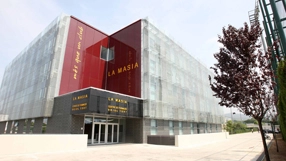
More than three decades after the original Masia opened its doors to young hopefuls, the academy is beginning a new era with the official inauguration of the "New Masia" residence at a gala ceremony on Thursday that included a spectacular firework display and was broadcast live on YouTube.
The Spanish and European champions have spent around 11 million euros on the box-like steel and glass-fronted building, which stands next to the pitches where the first team train and will initially house some 80 young athletes from the club's various sports teams.
The list of past football academy graduates is impressive, starting with current coach Pep Guardiola, who moved into the Masia in 1984 as a 13-year-old, leaving his home village of Santpedor around 70 kms from the city.
The former Barca and Spain midfielder paved the way for such names as current club captains Carles Puyol and Xavi, Andres Iniesta, who scored the goal that won Spain the 2010 World Cup, and former Arsenal captain Cesc Fabregas, a team mate of Messi's in the youth ranks.
In all, 11 of the current first-team squad are products of the Masia and Barca are often compared with great rivals Real Madrid, where goalkeeper Iker Casillas is the only Real youth academy graduate with a regular place in the starting 11.
English Premier League champions Manchester United, who lost to Barca in the 2009 and 2011 Champions League finals, have six academy players in their first-team squad.
FOUL MOOD
Alex Garcia coached Messi and Fabregas, as well as current Barca and Spain centre-back Gerard Pique, when they were 15-year-olds before leaving the club earlier this year to coach Georgian side Dinamo Tblisi.
In an interview with Reuters, Garcia remembered Messi and Fabregas as "very quiet and receptive lads but very competitive and mature on the pitch."
"They were so competitive in training that when they lost they went off to the showers in an extremely foul mood considering their tender years," Garcia said.
"The important thing is that they have retained the same character as back then.
"That's one of the secrets of why they are currently among the top 10 players in the world.
"Obviously when you have played together for many years this understanding lasts for ever, as we are seeing currently with the first team."
Rosario-born Messi, who attended Thursday's ceremony along with his team-mates, came t
